Views: 0 Author: Site Editor Publish Time: 2026-07-15 Origin: Site


Formulators frequently make the error of treating hydrocolloids and gelling agents as universally interchangeable ingredients on the production floor. Swapping out components without adjusting the surrounding matrix leads to severe production failures. Confusing pectin and gelatin in commercial or high-volume culinary applications introduces immediate risks. You will see catastrophic texture failures like syneresis, weeping, and improper setting right on the cooling line. Beyond physical defects, mixing these up causes strict violations of dietary certifications, specifically vegan and halal requirements. You must understand the fundamental structural, chemical, and functional differences between these two agents. Mastering these distinct properties ensures accurate product formulation, regulatory compliance, and optimal sensory outcomes for the end consumer.
Origin & Structure: Pectin is a plant-based carbohydrate extracted from fruit cell walls; gelatin is an animal-derived protein sourced from collagen.
Gelation Mechanics: Pectin typically requires specific acid (pH) and sugar (Brix) levels or calcium ions to set, whereas gelatin is thermo-reversible and sets purely based on temperature reduction.
Textural Differences: Pectin yields a firm, short bite with high thermal stability; gelatin provides a chewy, elastic texture that melts at human body temperature.
Thermal Tolerance: Gelatin degrades at high processing temperatures and melts easily, whereas pectin withstands pasteurization and high thermal processing.
Substitution Reality: They cannot be substituted at a 1:1 ratio; switching between the two requires complete recipe reformulation.
Table of Contents
Defining the baseline material differences and commercial formats establishes exactly why these ingredients behave differently under thermal and shear stress. Their distinct origins dictate their chemical behavior in any food matrix. You cannot troubleshoot a gummy or a jam without knowing what is happening at the molecular level.
Producers extract this hydrocolloid from agricultural byproducts, primarily citrus peels and apple pomace. These raw materials undergo an aqueous extraction process under mildly acidic conditions to isolate the functional compounds. The industry typically uses a hot dilute mineral acid wash, followed by precipitation using alcohol. This makes it a complex carbohydrate, specifically a polysaccharide, originally found in the middle lamella of plant cell walls where it provides structural integrity to the fruit.
Commercial formats generally include liquid and dry powdered versions. Liquid formats are pre-hydrated and ready for immediate incorporation, often used in small-scale canning. Dry powdered formats require careful handling on the manufacturing floor. Formulators must pre-blend the dry powder with sugar or other soluble solids before introducing it to water. A standard ratio is five parts sugar to one part powder. This physical separation prevents the powder particles from instantly hydrating on the outside while remaining dry on the inside. That phenomenon creates stubborn, insoluble clumps known as "fish eyes" that will not dissolve no matter how much shear you apply.
Gelatin extraction relies on the partial hydrolysis of collagen derived from animal skin, bones, and connective tissues. The most common commercial sources are bovine, porcine, or piscine (fish). This extraction process breaks down the complex, insoluble collagen structures into soluble proteins composed entirely of amino acids. The industry categorizes it into Type A (acid-treated, usually porcine) and Type B (alkali-treated, usually bovine).
Available primarily as powdered gelatin or sheet/leaf gelatin, this protein requires specific hydration techniques. Powdered and sheet formats must bloom in cold water before heating. You typically use five parts cold water to one part powder. The industry measures its gelling power using a "bloom strength" rating, which ranges from 50 to 300. A higher bloom number indicates a stronger, more rigid gel structure. Formulators rely on this metric to standardize recipes across different production batches. If a recipe calls for 200 Bloom and you use 250 Bloom, the final product will be noticeably tougher.
Characteristic | Pectin | Gelatin |
|---|---|---|
Source Material | Citrus peels, apple pomace | Animal skin, bones, connective tissue |
Chemical Classification | Polysaccharide (Carbohydrate) | Protein (Amino Acids) |
Hydration Method | Pre-blend with sugar, disperse in hot water | Bloom in cold water, then gently heat |
Primary Measurement | Degree of Esterification (DE) | Bloom Strength |
Dietary Status | Vegan, naturally Halal/Kosher | Non-vegan, requires specific sourcing for Halal/Kosher |
Analyzing the specific environmental triggers and temperature profiles required for successful gelation reveals why direct substitutions fail. Each agent relies on entirely different chemical mechanisms to form a stable matrix. If you miss the target parameters by even a small margin, the batch will fail.
High Methoxyl (HM) variants require specific environmental conditions to set properly. Formulators must ensure high soluble solids, typically a sugar or Brix level above 55%, combined with a low pH acidic environment below 3.5. You measure this using a calibrated refractometer and a reliable pH meter. These conditions suppress the electrostatic repulsion between the polymer chains, allowing them to form a three-dimensional network. The sugar binds the free water, and the acid neutralizes the negative charges on the molecules.
Low Methoxyl (LM) variants operate differently. They rely on calcium ions to cross-link the polymer chains and form a gel. This calcium-reactive mechanism allows for successful gelation in low-sugar or sugar-free applications. You often see LM used in diabetic jams or savory glazes. Once set, most of these gels demonstrate irreversible thermo-stability. They will not melt upon reheating, making them highly suitable for baked goods like thumbprint cookies or toaster pastries.
This protein exhibits thermo-reversible gelation. It dissolves completely in warm water, usually around 50°C (122°F). As the solution cools below 15°C (59°F), the amino acid chains form a triple-helix gel matrix. This process is entirely independent of sugar and acid concentrations. The gel forms purely based on temperature reduction, providing significant flexibility in low-sugar or neutral-pH formulations. You can make a savory aspic or a high-sugar marshmallow using the exact same mechanism.
Heat impacts these agents in opposite ways. You must control the thermal load during processing.
Gelatin proteins denature and permanently lose their gelling power when exposed to boiling temperatures or prolonged heat. Formulators must add it at the end of the heating process, off the boil.
Plant-based polysaccharides require boiling temperatures to fully dissolve and activate their gelling properties. They withstand high thermal processing without losing functionality.
Extended holding times in heated hoppers will slowly degrade both agents, but proteins break down much faster under high heat and high acid conditions.
Mapping chemical properties to the final consumer experience highlights the distinct sensory profiles each agent delivers. Texture drives consumer acceptance, making the choice of gelling agent critical for repeat purchases.
Plant-derived polysaccharides create a "short" texture. This results in a clean, firm bite that fractures easily rather than stretching. When you bite into a fruit slice candy, your teeth shear straight through it. This clean break is ideal for fruit pastes, traditional jellies, and high-end fruit confections. Gelatin provides a highly elastic, chewy, and gummy texture. This stretch and bounce are essential for traditional gummy bears and marshmallows. When you pull a traditional gummy bear, it stretches before snapping.
The "Texture Matching Fallacy" often misleads formulators. Mimicking gelatin's elasticity using pure plant-based alternatives is chemically impossible. Achieving that specific bounce without animal proteins requires blending secondary hydrocolloids. You usually have to incorporate carrageenan, modified starches, or agar to modify the fracture mechanics and introduce some elasticity.
Animal-derived proteins possess the unique property of melting at 35°C (95°F), which perfectly matches human body temperature. This creates a smooth mouthfeel and allows for rapid, intense flavor release as the gel matrix breaks down instantly on the palate. The flavor compounds hit the olfactory sensors immediately. Plant-based gels do not melt in the mouth. They require active mastication to physically break down the gel structure and release the trapped flavor compounds. This results in a slower, more sustained flavor release profile.
Identifying the optimal use cases where this specific hydrocolloid outperforms other options ensures product stability and sensory success. You choose this ingredient when thermal stability and clean flavor release are paramount.
Traditional jams, jellies, and marmalades rely heavily on plant-based hydrocolloids. The natural fruit acid and added sugar facilitate perfect gelation. Gelatin degrades completely during the intense heat of water-bath or pressure canning, turning into a watery liquid. Clear Jel and modified starches are preferred for high-viscosity pie fillings but create cloudy, unappealing textures if used for clear jellies. For a brilliant, transparent fruit preserve, you need the right degree of esterification.

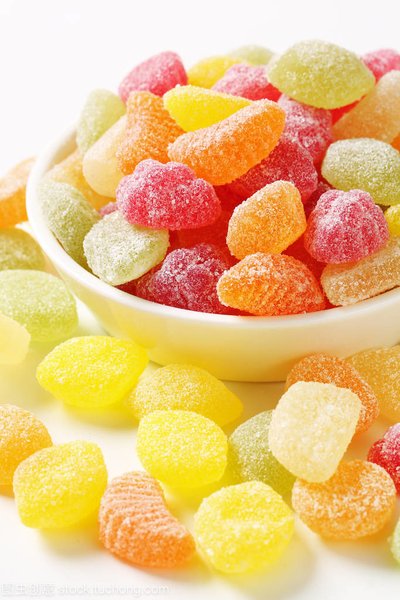
The demand for plant-based gummy manufacturing relies entirely on this ingredient to achieve a desirable, stable texture without utilizing any animal derivatives. It provides the structural backbone for vegan fruit snacks, wellness gummies, and vitamin supplements. Because it sets quickly, you must manage the depositing temperature carefully to prevent the syrup from gelling in the pipes.
In acidic environments like drinkable yogurts, this hydrocolloid protects dairy proteins. It prevents the casein proteins from denaturing, clumping, and precipitating out of the solution. It wraps around the protein molecules, providing steric hindrance. This ensures a smooth, stable beverage throughout its shelf life, preventing the unsightly whey separation at the top of the bottle.
Specific culinary and commercial applications demand the unique properties of animal-derived protein matrices. You use this when you need aeration, elasticity, or a specific melting profile.
This protein offers superior whipping and stabilizing properties. It traps air efficiently, making it the mandatory structural component for marshmallows, nougats, and aerated gummy products where a light, bouncy texture is required. The protein films form around the air bubbles, preventing them from coalescing and collapsing during the cooling phase.
Panna cotta, mousses, and Bavarian creams depend on this ingredient. A delicate, melt-in-the-mouth texture is the primary success criterion for these chilled desserts. This is a sensory experience that plant-based alternatives cannot replicate. If you try to make a panna cotta with a plant-based alternative, it often turns out brittle or chalky rather than creamy and smooth.
Addressing the operational hazards of swapping gelling agents prevents costly production failures and wasted materials. You cannot just swap the powders on the scale and expect the same result.
A direct swap guarantees physical failure. Animal proteins used in a plant-based recipe will melt at room temperature or degrade entirely during the required boiling phase. The high acid content of a fruit jelly will also hydrolyze the protein, destroying its structure. Conversely, plant-based powders used in a protein-based recipe will fail to set without the correct pH and Brix adjustments, resulting in a liquid syrup. The water activity will be wrong, and the product will likely mold.
Transitioning a formula requires a complete overhaul. Follow these steps when moving from an animal protein to a plant-based hydrocolloid:
Adjust hydration temperatures: You must boil the plant-based powder to hydrate it fully, whereas the protein only needs warm water.
Balance the pH: Introduce citric acid, malic acid, or a buffering salt like sodium citrate to hit a target pH of 3.2 to 3.6.
Modify total soluble solids: Ensure your final Brix reading is between 60% and 65% for proper gelation.
Alter depositing temperatures: Keep the hopper heated above 85°C (185°F) to prevent premature setting before the syrup hits the molds.
Adjust cooling times: Plant-based gels set rapidly at room temperature, eliminating the need for extended chilling tunnels.
Non-textural considerations heavily drive procurement decisions and dictate market access for finished products. You have to look beyond the benchtop and consider the entire supply chain.
Plant-based hydrocolloids offer universal dietary compliance. They inherently meet vegan, Kosher, and Halal requirements without complex supply chain verification. Animal proteins introduce severe sourcing complexities. Formulators must secure specific bovine or fish sources with strict chain-of-custody documentation to achieve Halal or Kosher certification. Furthermore, they remain strictly non-vegan, alienating a growing segment of the consumer market.
Products formulated with plant-based gels offer significant shelf-life and transport advantages in warm climates. They maintain their structural integrity during summer transit in non-refrigerated trucks. Animal protein-based products risk melting during transport or retail display if ambient temperatures exceed 35°C. This requires expensive temperature-controlled logistics, cutting into profit margins and complicating distribution networks.
Choosing between Pectin and Gelatin depends on your product formulation, processing conditions, desired texture, and dietary requirements. By understanding their different gelation mechanisms, thermal stability, and application characteristics, food manufacturers can optimize product quality, improve production efficiency, and ensure consistent performance across a wide range of food applications.
Working with an experienced food ingredient supplier is equally important for ensuring consistent product quality and formulation success. MEGAFOOD specializes in high-quality food ingredients, customized formulation solutions, and professional technical support, helping food manufacturers, distributors, and global food processing companies develop reliable, innovative, and high-performance food products.
Define your target texture, processing temperature, and dietary requirements before selecting a gelling agent.
Validate pH, Brix, and hydration conditions through pilot-scale testing before commercial production.
Avoid direct ingredient substitution without complete formula optimization.
Work with reliable ingredient suppliers to ensure consistent raw material quality, regulatory compliance, and long-term production stability.
A: No. It requires a complete recipe overhaul regarding sugar content, acid levels, and cooking temperatures. A direct swap will result in complete structural failure.
A: Yes. It is a 100% plant-based carbohydrate extracted primarily from citrus peels and apple pomace.
A: No. It sets at room temperature as the solution cools from its boiling point. Refrigeration is not required for the gelation process.
A: Excessive firmness usually results from too much acid, boiling off excessive water, or using an incorrect grade for the specific application.
A: Yes. Advanced formulation techniques blend both to achieve a hybrid texture that offers both chewiness and improved thermal stability.
A: Pectin is the standard for canning due to its high heat stability and acid compatibility. Gelatin degrades and loses its gelling power at canning temperatures.