Views: 0 Author: Site Editor Publish Time: 2026-02-13 Origin: Site


Pectin can upset your stomach. It may cause diarrhea, gas, or cramps. This happens more in people who are sensitive.
Taking a lot of pectin can cause problems with absorbing nutrients. It can lower calcium and iron in your body.
People who are allergic to citrus should not eat pectin. It can cause allergies like rashes or trouble breathing.
Pectin can stop some medicines from working well. This includes drugs for the heart and diabetes.
People with digestive problems like IBS may feel worse after eating pectin.
You should read food labels to find pectin in processed foods. This helps you avoid health problems.
Making food at home lets you control how much pectin you eat. You can also avoid extra additives.
Talking to your doctor can help you with pectin issues. They can help you make good food choices.
Pectin can cause problems in your stomach. You might get diarrhea, gas, or cramps after eating pectin foods. These issues happen more if you eat a lot or take citrus pectin supplements. Pectin makes digestion harder for your body. It forms a thick gel inside your stomach and intestines. This gel stops enzymes from breaking down food. When enzymes cannot work, your body has trouble digesting starches and nutrients. You may feel pain or discomfort because of this.
Diarrhea is a common problem with pectin. If you take pectin supplements, you may have loose stools or go to the bathroom often. Pectin adds more water to your intestines. Your body cannot absorb all the water, so it moves through fast. Studies show young adults had more diarrhea after two weeks of pectin supplements. Some people get used to pectin after a month, but high doses still cause problems.
Study Focus | Findings |
|---|---|
Pectin Supplementation | Young adults had more diarrhea after two weeks. Some got used to it after four weeks. |
GI Symptoms in Elderly | No big change in GI symptoms compared to placebo. |
Gas and bloating are also common with pectin. Your stomach may feel swollen or make noises. Pectin can trap gas in your gut and make you uncomfortable. The thick gel slows digestion and makes food ferment longer. This creates more gas. People with sensitive stomachs or who took antibiotics may notice these symptoms more.
Mild stomach problems like cramps and diarrhea happen with citrus pectin.
Symptoms are worse for people with IBS, fruit sensitivities, or recent antibiotic use.
Stomach cramps can cause sharp pain or discomfort. Pectin covers starch granules and blocks enzymes from breaking down food. Your digestive system works harder and cramps can happen. If you have past stomach problems, cramps may be worse. Citrus pectin can cause stronger reactions because it is easier to absorb.
Pectin can irritate your gut, especially if you are sensitive. The gel makes material in your intestines thicker. This change affects how nutrients move through your body. Eating pectin for a long time may change your gut lining. You may feel more discomfort or have trouble absorbing nutrients.
Some groups have more side effects from pectin. If you have IBS, fruit sensitivities, or took antibiotics recently, you may react more to pectin. Kids and older people may also have trouble digesting pectin. Their stomachs are more sensitive, so they may get diarrhea, gas, and cramps more often. Watch how your body reacts to pectin and limit it if you notice problems.
Tip: If you feel stomach pain after eating pectin foods, keep a food diary. This helps you find which foods cause problems and choose healthier options.
If you are allergic to citrus, you must be careful with pectin. Modified citrus pectin can cause allergies in some people. You might get symptoms right after eating foods with pectin. These symptoms can show up on your skin, in your breathing, or in your stomach. It is not common to be truly allergic to fruit pectin, but it can happen. If you are sensitive to citrus, pectin is not good for you.
Modified citrus pectin comes from citrus fruits. Many processed foods and supplements use it. If you have a citrus allergy, stay away from these products. Even a little bit can cause a reaction. The risk is higher if you already have food allergies or sensitivities. Always check food labels for pectin before eating.
People with citrus sensitivity or food allergies need to be careful with modified citrus pectin.
Allergic reactions can cause rash, hives, or trouble breathing.
Stomach problems like gas, bloating, cramps, and diarrhea are common, especially if you already have health issues.
You might see rashes or hives on your skin after eating pectin. Breathing problems can also happen. These symptoms can start fast and may be serious. If you have asthma or other breathing problems, pectin can make things worse. Get medical help if you have trouble breathing after eating pectin foods.
Note: Always look for allergy signs when you try new foods. If you see skin changes or have trouble breathing, stop eating the food and call your doctor.
Some people are more likely to have allergies to pectin. Kids and older adults have weaker immune systems. They may react more to allergens in pectin. It is important to know who is at higher risk.
Kids can have strong reactions to pectin. Their bodies are still growing, so allergies can be worse. One child had a positive skin test to pectin and reacted to cashew and pistachio. The pectin came from citrus, which shows citrus allergies can be a problem. Watch kids closely when they eat foods with pectin.
Older adults may have more problems with pectin. Their immune systems are not as strong, and they may take many medicines. Allergic reactions can be harder to handle. Help older people avoid pectin if they have allergies or sensitivities.
Group Affected | Allergens Associated |
|---|---|
People with allergies to non-specific lipid-transfer proteins (nsLTPs) | Fruits in the Rosaceae family, tree nuts, and other plant foods |
nsLTP-sensitized patients | Often allergic to many plant foods, including non-Rosaceae fruits, tree nuts, and vegetables |
You need to protect your health by knowing your risks. If you are in a high-risk group, stay away from pectin and pick safer foods.

Pectin can make it harder for your body to use some medicines and supplements. Many people do not know that this common food ingredient can change how well their medicine works. If you take certain drugs or vitamins, you should learn how pectin affects you.
Pectin can stick to some medicines in your stomach and intestines. This sticky action can slow down or block the medicine from getting into your blood. If you eat pectin at the same time as your medicine, you might not get all the help you need from it. When you take your medicine matters a lot. Always ask your doctor or pharmacist before using pectin if you take prescription drugs.
Some heart medicines do not work as well if you eat pectin foods. For example, digoxin (Lanoxin) and lovastatin (Mevacor) can have problems with pectin. The sticky gel from pectin can trap these drugs and make them less helpful. You may need to change when you take your medicine to stop these problems.
Medication | Interaction Rating | Recommended Timing |
|---|---|---|
Digoxin (Lanoxin) | Moderate | Take pectin four hours before or one hour after. |
Lovastatin (Mevacor) | Moderate | Take pectin at least one hour after. |
If you use these heart medicines, do not take them with pectin at the same time. Wait at least one hour after your medicine before you eat foods with pectin.
Pectin can also change how diabetes treatments work. High-methoxyl pectin lowers how much sugar your body takes in. This can make your blood sugar harder to control. Some diabetes medicines may not work as well if you eat a lot of pectin. The thick gel slows down how fast your body takes in sugar and medicine. You may see changes in your blood sugar if you do not space out your medicine and pectin.
Pectin types can make your gut thicker and lower blood sugar.
High-methoxyl pectin lowers how much sugar your body absorbs.
Pectin's thickness changes how fast your body uses diabetes medicine.
If you have diabetes, talk to your doctor about the best way to take your medicine and eat foods with pectin.
Pectin does not just affect prescription drugs. It can also block your body from using important vitamins and minerals. You may think you are getting enough nutrients, but pectin can lower how much your body gets.
Some supplements do not work as well if you eat pectin. For example, pectin can block carotenoid and alpha-tocopherol supplements. These nutrients help your body fight sickness and keep your cells healthy. If you take these supplements with pectin, your body may not use them all.
Pectin can lower how much carotenoid and alpha-tocopherol your body uses.
You may not get all the good things from your vitamins if you take them with pectin.
It is best to take your supplements at least one hour before or after eating foods with pectin.
Tip: Always read the labels on your supplements and medicines. Ask your doctor or pharmacist if you are not sure about the best time to take them.
Pectin is not good for you if you need medicines or supplements to stay healthy. You should pay attention to timing and talk to your healthcare provider. This helps you avoid problems and get the most from your treatment.
Eating foods with pectin can stop your body from getting all the nutrients it needs. This is a problem for your health if you eat lots of processed foods or take pectin supplements. Many people do not know that pectin can block your body from using minerals like calcium and iron.
Your body needs calcium to keep bones strong, teeth healthy, and muscles working. Pectin can make your body absorb less calcium. It changes how your intestines use calcium and affects how cells move calcium. If you eat foods high in pectin, you may not get enough calcium, even if you eat dairy or take supplements.
Fiber Type | Effect on Calcium Availability |
|---|---|
High Esterified Pectin | Reduced by about 10% |
Low Esterified Pectin | N/A |
Pectin changes how your gut works. It lowers enzyme activity that helps your body use calcium. It also changes how cells store and move calcium. These changes make it harder for your body to keep bones and muscles healthy.
Mechanism | Description |
|---|---|
mRNA Expression | Pectin changes mRNA levels that control calcium absorption. |
Intestinal ALP Activity | Pectin lowers enzyme activity needed for calcium absorption. |
Calcium Localization | Pectin changes how cells move and store calcium. |
Iron helps your blood carry oxygen and keeps you feeling energetic. Pectin can block iron from getting into your body. Even if you eat foods with lots of iron, pectin can lower how much your body uses. This can make you feel tired or weak after some time.
Group | Intervention | Iron Absorption Change |
|---|---|---|
I | Pectin | Big decrease (P < 0.02) |
II | Cellulose | No change |
Control | Basal | Baseline absorption rates |
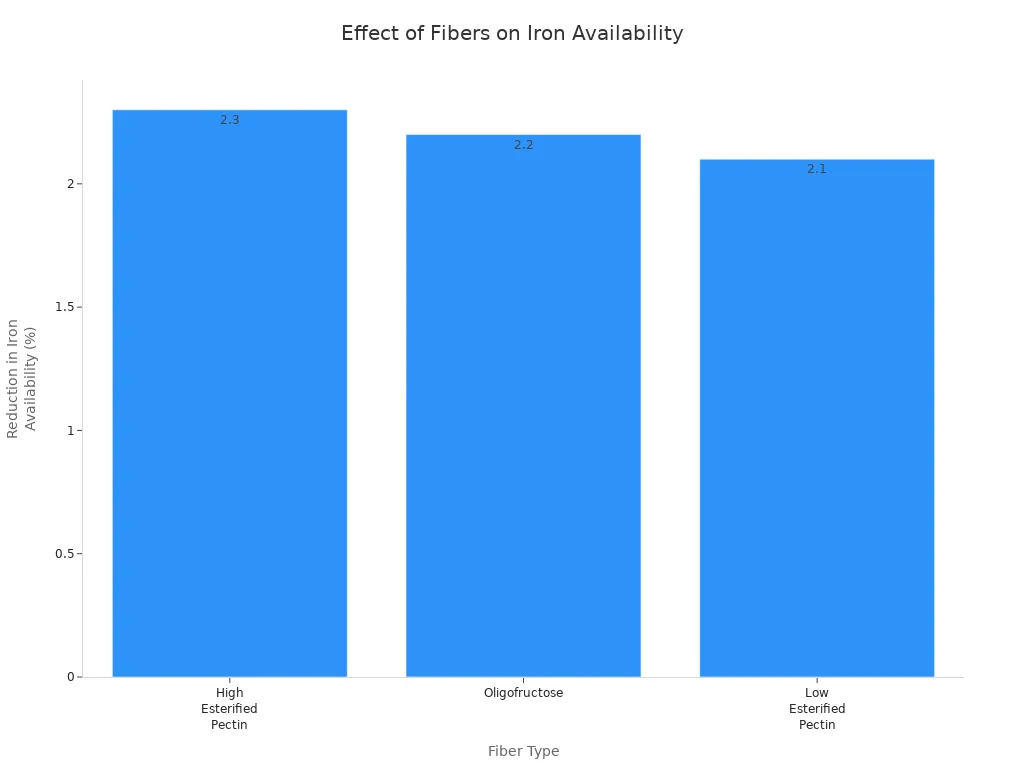
Fiber Type | Effect on Iron Availability |
|---|---|
High Esterified Pectin | Reduced by 2.3% |
Oligofructose | Reduced by 2.2% |
Low Esterified Pectin | Reduced by 2.1% |
If you keep eating lots of pectin, you may not get enough calcium or iron. Over time, this can cause weak bones, tiredness, or other health problems. Your body needs these minerals every day. If you do not get enough, you may face bigger risks.
Eating too much pectin for a long time can cause liver and bile problems. It can also change how your body handles fats and cause immune issues. These problems may lead to serious health risks.
Watch for signs like tiredness, weak muscles, or bone pain. If you notice these symptoms, talk to your doctor. Limiting pectin can help keep your body strong and healthy.
If you have stomach problems, you should watch what you eat. Pectin can make your symptoms worse. People with IBS have sensitive stomachs. Eating pectin foods can cause pain and bloating. You might notice changes in your bathroom habits. Even small amounts of pectin can upset your gut. You may get cramps or diarrhea after eating fruit spreads or jams. Processed foods with pectin can also cause trouble.
Doctors see more side effects in people with IBS who eat pectin. Your gut lining can get irritated. This makes it harder to digest other foods. If you have Crohn’s disease or ulcerative colitis, pectin can cause bad reactions. Your doctor may tell you to avoid pectin to keep your gut healthy.
Tip: Keep a food diary if you have stomach problems. Write down what you eat and how you feel. This helps you find foods that cause issues.
If you take many medicines, you need to know how pectin affects them. Pectin can stick to some drugs in your stomach. This can stop your body from using the medicine right. You may not get all the help from your treatment. Some medicines that interact with pectin are antibiotics, heart drugs, and cholesterol pills.
Here is a table that shows how pectin changes how your body uses these medicines:
Medication Type | Interaction with Pectin | Recommendation for Timing |
|---|---|---|
Antibiotics (Tetracycline) | Lowers how much your body absorbs, making it less helpful. | Take pectin 2 hours before or 4 hours after. |
Cardiac Glycosides (Digoxin) | Lowers how much your body absorbs, making it less helpful. | Take pectin 4 hours before or 1 hour after. |
Cholesterol-lowering (Lovastatin) | Lowers how much your body absorbs, making it less helpful. | Take pectin at least 1 hour after lovastatin. |
Talk to your doctor or pharmacist about the best way to take your medicine if you eat pectin foods. They may tell you to change when you eat or take your medicine. This helps you avoid problems and keeps your treatment working.
Pectin can make tetracycline, digoxin, and lovastatin work less well.
Changing when you eat pectin and take your medicine can help you avoid these problems.
If you need to avoid pectin, look for foods with other thickeners. Safer options are agar, guar gum, or cornstarch. These do not cause the same side effects or drug problems. Always check food labels and ask your healthcare provider for help.
Note: Protect your health by learning about food ingredients. If you take many medicines, pick foods without pectin to lower your risk.
You can eat less pectin if you learn to find it on food labels. Companies add pectin to many processed foods to make them thicker or more stable. You will see pectin in jams, jellies, fruit spreads, yogurt, and baked goods. When you shop, check the ingredient list on each package. Look for "pectin" or "citrus pectin." Sometimes, labels say "modified citrus pectin" or "fruit pectin." These names mean the food has pectin.
Tip: If you see "gelling agent" or "stabilizer," check if pectin is listed in parentheses.
Here is a simple checklist to help you spot pectin in foods:
Read the whole ingredient list.
Watch for "pectin," "citrus pectin," or "modified citrus pectin."
Look for hidden sources in jams, jellies, and fruit snacks.
Check dairy foods like yogurt and ice cream.
Review baked goods and processed desserts.
Food Category | Common Pectin Sources |
|---|---|
Spreads | Jams, jellies, marmalades |
Dairy | Yogurt, ice cream, pudding |
Snacks | Fruit chews, gummies |
Baked Goods | Pastries, cakes, pie fillings |
You can control how much pectin you eat by making food at home. Homemade jams and jellies let you skip store-bought pectin. Use chia seeds or cook fruit longer to make it thick. You can make fruit sauces or spreads without extra thickeners. When you bake, try recipes that do not use pectin or use cornstarch or agar instead.
Pick fresh fruit instead of processed snacks.
Make your own yogurt or desserts with simple ingredients.
Try homemade fruit spreads with less sugar and no pectin.
Note: Homemade foods let you decide what goes in your meals. You can avoid extra additives and lower your chance of side effects.
If you worry about pectin, talk to a doctor or dietitian. They can help you learn about your risks and give advice on safe foods. If you take medicine or have allergies, a professional can help you plan your diet. You might need a special plan to avoid pectin and still get enough nutrients.
Ask your doctor before changing your diet a lot.
Bring a list of your medicines and supplements to your visit.
Tell your provider about your symptoms or worries about pectin.
Reminder: Expert advice keeps you healthy and helps you avoid mistakes. Always ask an expert if you are unsure about food ingredients.
You can have health problems from pectin. These include stomach pain, trouble with medicine, and allergies. People with citrus allergies or gut issues should be careful. If you cannot eat much sodium or potassium, watch out for pectin.
People with fruit or food allergies may react to modified citrus pectin, especially if they are sensitive to citrus.
Those with IBS, IBD, SIBO, or who took antibiotics recently often get worse symptoms.
People on special diets need to check sodium and potassium in pectin foods.
Read food labels, make your own food, and talk to your doctor if you feel sick.
You find the highest pectin levels in apples, citrus fruits, and their peels. Processed foods like jams, jellies, fruit snacks, and yogurt often list pectin as an ingredient. Always check food labels for "pectin," "citrus pectin," or "modified citrus pectin."
Yes, you can react to pectin, especially if you have citrus or fruit allergies. Symptoms include rashes, hives, or breathing problems. If you notice these signs after eating pectin foods, stop eating them and contact your doctor.
Cooking does not destroy pectin. Heat can change its structure, but it still thickens foods. Homemade jams and jellies use this property. You still need to watch your intake if you have sensitivities.
You avoid pectin by reading ingredient lists and choosing fresh, whole foods. Make your own spreads or desserts without added thickeners. Ask your doctor or dietitian for safe alternatives.
Tip: Use chia seeds or agar as thickeners in homemade recipes.
People with IBS, citrus allergies, or those taking multiple medications should avoid pectin. Children and older adults also face higher risks. If you belong to these groups, talk to your healthcare provider before eating foods with pectin.
Yes, pectin can block your body from absorbing some medicines. Heart drugs, diabetes treatments, and antibiotics may not work as well. Take your medicine at a different time than pectin foods. Ask your pharmacist for guidance.
You may notice diarrhea, gas, bloating, or stomach cramps. Long-term high intake can cause weak bones or tiredness from nutrient loss. Keep a food diary to track symptoms and discuss them with your doctor.